

Originally, my biggest fear for Xenonauts was that it was shaping up to be inspired so heavily by the original X-Com that it was going to be a carbon copy with slightly shinier graphics and a few little adjustments here and there. And I was exactly right. However, now some weeks after release, my biggest fear has somewhat shifted: I’m now very concerned that I can’t drag myself away from the game long enough to finish this review.
It’s of no exaggeration to suggest that these paragraphs are crafted between snatched handfuls of missions. I’m aware of how I’m kidding myself into believing my own ethereal sense of professionalism; what if the next UFO encounter shows me something I’ve not seen and blows my opinion wide open? What if my R&D team discover something that will change everything? What if aliens storm Dubai again in new numbers, or raze my main HQ once more? These things could all happen, I guess, but I’m aware that all I really want is just one more turn.
For the unaware, X-Com is universally agreed to be the greatest game ever created a very in-depth alien apocalypse simulator rife with micro-management, tactical combat, base-building, research trees, government juggling and a tidal wave of stats that make early edition Dungeons & Dragons look casual. Back in them olden times, X-Com tasked you with keeping track of every missile your fighter jets fired into alien UFOs and every bullet ploughed into pasty grey extra-terrestrial skin. Running low on assault rifle clips? Better order some up. Just used up your last med kit? Can’t buy them; got to manufacture more from scratch.
 Credit: Goldhawk Interactive
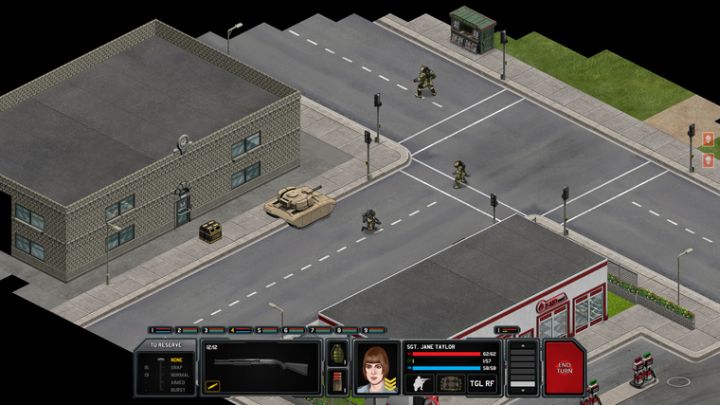
Xenonauts does away with all the fiddly stuff; essentials like bullets are in infinite stock and take up no room in your warehouses. Crashed fighter jets were discarded in X-Com, forcing you to build or buy anew upon losing a dogfight; here, they’re recovered and repaired without prompt. Some avenues of research automatically upgrade equipment on the fly rather than force you to scrap perfectly functioning builds with one obsolete mechanism.
I’m not going to lie: the elitist in me raged at these changes. How dare they water down my complete dictatorship: if I wanted a streamlined, more simplistic X-Com, I’d be playing (a few hundred hours more of) the excellent Firaxis reboot. But! The further into Xenonauts I played, the more I realised that I did not miss these things at all. Who wants to be sorting through mouldy harpoon bolts and junking huge piles of corpses to try and make room in cluttered warehouses so you can take order of new smoke grenades? Xenonauts stomps that into the ground, and with it takes away the ability to undercut X-Com’s funding bonuses from world governments. Who cared if China was reducing their funding when you can make several times the amount lost by manufacturing some obsolete junk, and selling it off for a huge profit?
Xenonauts forces you to care about appeasing government overlords you used to casually ignore and despise. Losing a few world powers to the aliens in any of the X-Coms has always been a blow, but was never a big deal with all the different revenue building options available to you. Here, you lose a couple and the diminished funds really cut you deep. Lose five and its game over. One of the many things that have been lovingly restored is the rarely seen option to sink hours and hours into the game and still come up on the losing side should you fail to keep atop the alien threat. It’s not that easy keep yourself rolling, either; initial sorties only stack the deck against you with hardier troops deployed with far superior technology. Your jumpsuit-clad cold-war tech soldiers shoulder their assault rifles and get effortlessly mowed down with plasma bursts while watching the weakest strain of invaders take several bullets to down. Slender humanoid snipers mix with brutish lizard men while hovering disks scout the area and plough troops with rapid fire laser pulses.
 Credit: Goldhawk Interactive
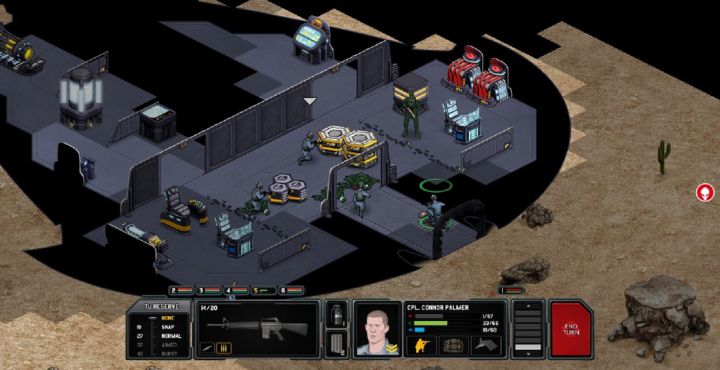
The idea is to eke out underdog victories, steal alien tech from cold, dead hands, then use it against them. As such, the most you can ever achieve is a level playing field. They remain better equipped, more evolved. Develop laser weaponry, they bust out mech armour that’s resistant to them. Get used to stacking troops by crashed UFO doors, ready for a breach, and they’ll start casually dropping grenades in your midst. Think outside the box; make breach holes with C4, but risk damaging vital UFO parts you’ll need for future research or chunks of cold, hard cash.
The enemy forces do borrow heavily from the X-Com lore. That alien that deals melee damage and turns anyone it kills into a zombie that births hostile parasitic mayhem? Maliciously redesigned to destroy entire platoons in panic fire and face eating. Mind controlling jerks that sit in their ivory towers brain-jacking your troops and making them blast each other in the back? Brokenly shoehorned in. Psi balance has been readdressed in Xenonauts, doing away with humanity’s ability to shameless steal our otherworld visitor’s telepathic abilities and instead making them helpless puppets, particularly end game. Here, perhaps the ability to lose the game starts to slightly stray away from being a consequence of poor planning or performance, and starts to unfairly hamstring you from the shadows.
It becomes increasingly clear that your troops are going to be remotely controlled from afar, and you’re offered no real way to deter this. There’s nothing you can develop to lessen the chances, no training you can partake in to bolster your troop’s chances of shrugging it off. It sounds cheap on paper; in practise, it’s downright infuriating to see the final assaults you’ve been preparing for with hours and hours of running battles, endless development and jumping through governmental hoops end so cheaply. On the other hand, having what was left of my army crawl over the bodies of both fallen foes and friends I’ve had to put down myself to finally disintegrate the big boss raining down all the damage was one of the most satisfying moments I’ve yet to find in gaming.
 Credit: West One/Hudson Soft
 Credit: Goldhawk InteractiveCredit: Goldhawk Interactive
It’s been a few hours between the start of this paragraph and the last; it’s my second playthrough of the game, and the UFO’s have just started invading in threes, which is a prelude to terror attacks. I can pick apart the smaller scouts still (and raze the crash sites with airstrikes if I can’t be bothered to storm the shell) but no such option exists in terror attacks; you either respond, or a city is wiped out and your popularity plummets. Unlike X-Com these two missions often promote vastly differing alien tactics. Down a UFO, and the surviving aliens dig in, rarely hunting you out and taking cover in and around their downed craft. Terror missions contain shock troops, better armed, better prepared and openly searching the map for you and surviving civilians. The death rattle of an innocent from the darkness is nothing new, but, in Xenonauts the people fight back. Armed police officers take pot shots and, land near a military base, and you might find a couple of soldiers littered around the place to give you a hand. Once, while clearing out a farm, I injured an alien who thought better of his chances in a standing firefight, turned and ran around the back of a barn. There, waited the farmer with a shotgun. And that was the end of that story.
Xenonuats does a lot of little things to try and modernise the Gollop games of old without losing that which have helped it endure through the years. Dogfights are interactive and not just played out on a static screen; loadouts are fixed so you don’t need to restock your troops from scratch before every single mission; directional cover makes a drastic difference when receiving or offering fire; secondary victory conditions mean that every fight doesn’t have to be a long-running bug hunt. At the same time, there’s time unit reserves and nerdy shot completion percentages and dodgy height scaling to contend with. There’s risk and reward; soldiers that survive see their stats steadily climb, but the death of a hardened warrior plummets morale much faster than that of a green rookie. So much feels familiar; so much has been subtly improved.
I could go on, but I’ve got Xenonauts shrunk down on my toolbar, and it’s been a few minutes since I took my last turn.