

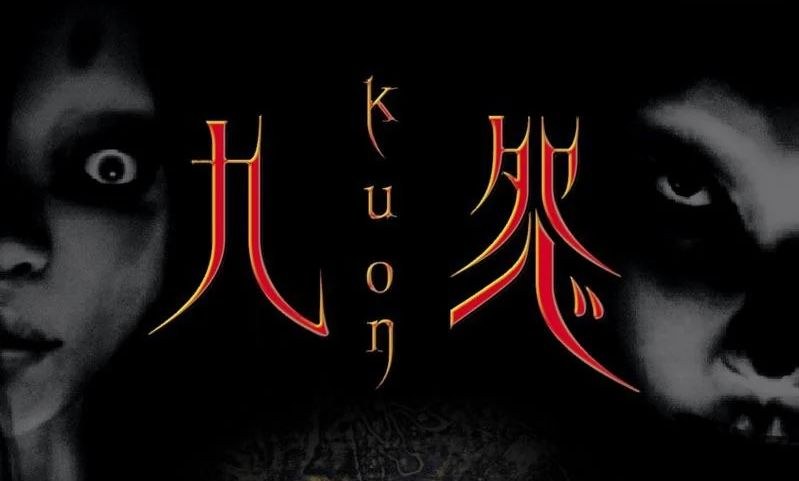
Long before they became the unchallenged architects of digital masochism, FromSoftware used to just throw things at the wall to see what bled. Before the sprawling horizons of Elden Ring or the rhythmic perfection of Sekiro, there was a time when the studio was just another weird Japanese developer fumbling in the dark of the PlayStation 2’s golden era, trying desperately to figure out how to make a camera move in three dimensions without giving the player a mild stroke.
Enter Kuon.
Released in 2004 and now trading on second-hand markets for the price of a modest used car, Kuon is a classic case of aesthetic genius trapped inside a mechanical prison. It’s a Heian-period ghost story told with an incredible, suffocating sense of restraint, completely ruined by the fact that you occasionally have to actually play it.
Kuon doesn't hold your hand through its narrative. Instead, it uses those hands to slowly and deliberately strangle the life out of a noble house, inviting you to watch the quiet, terrible collapse of the Fujiwara clan from a respectful, chilly distance. The plot is a masterpiece of classical folk horror, subtle and clever in how it creeps you out; it’s just a pity that the execution eventually hits a brick wall of structural repetition and narrative panic.
 Credit: From Software/AgeTec/Acclaim Entertainment
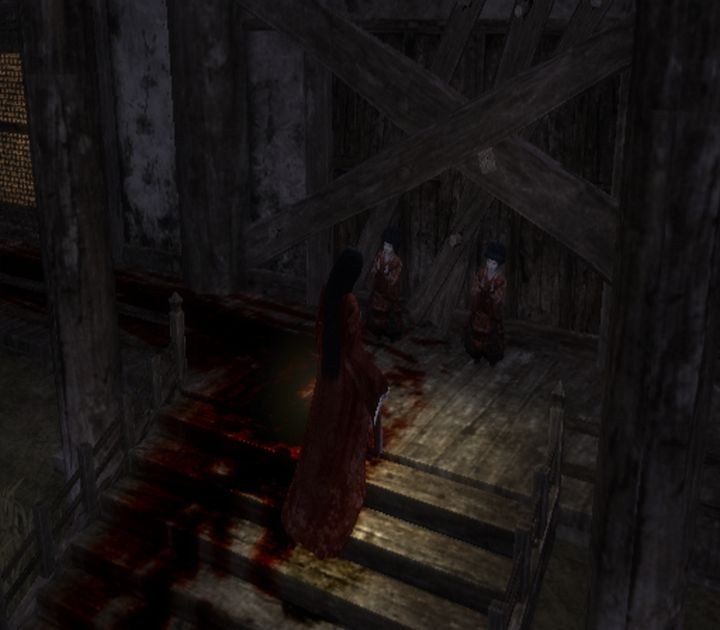
The story is told across two main perspectives: the Yin phase, following Utsuki, a vulnerable girl searching for her exorcist father, and the Yang phase, tracking a confident shrine maiden named Sakuya investigating the same manor. The script’s smartest trick is how it handles these two journeys. On paper, it presents a classic duality — the helpless victim and the capable warrior. In execution, however, the narrative takes great pleasure in subverting that comfort. Sakuya’s confidence doesn't protect her from the grotesque reality of the mansion; it merely ensures she has a front-row seat to an ancestral bloodline turning inside out like a discarded sock.
The horror here isn't born from plot twists or world-ending stakes, but from internal rot. You wander into rooms thick with the stench of mulberry cocoons, tracking silk threads that trail off into dark corners where things that used to be human now weep into their sleeves. It’s a slow, patient unravelling of family betrayal and forbidden magic that treats the player with an uncommon level of literary respect. FromSoftware understands atmosphere here in a way that modern horror completely forgets. The game doesn't scream at you. It whispers. It relies on the terrifying architecture of negative space, forcing you to walk through dimly lit courtyards where the only sound is the rhythmic, unsettling click of wooden sandals against stone, or the faint, distant chant of a child’s song that seems to hang in the air like a foul odour.. Visually and aurally, Kuon is a minor masterpiece of historical gothic dread.
Then, the video game part happens.
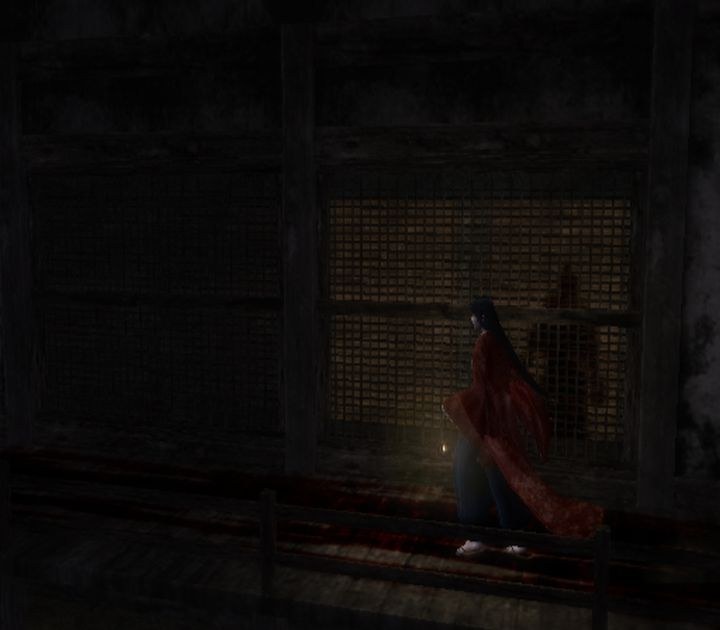
The primary antagonist of Kuon isn't the restless spirits or the grotesque mulberry cocoons; it’s the mundane act of locomotion. Sakuya and Utsuki walk with the agonizing, glacial indifference of someone wading through wet cement. You can hold down a button to sprint, but the game actively punishes you for doing so. Running fills a "Tempest" meter, blinding your screen with static, triggering phantom heartbeats, and alerting every supernatural horror within a three-mile radius. So, you walk. You walk down a hallway. You walk down another hallway. You walk back down the first hallway because you found a key shaped like a butterfly. It turns tense haunting into tedium. Then combat inevitably breaks out and the illusion of terror instantly collapses further still. Kuon handles encounters with a bizarre card-based magic system and physical weapons that feel like swinging a wet rolled-up newspaper. You summon a spectral wolf or fire a brief burst of flame, only for the auto-aim to track a wall tile while a deformed ghoul slowly chews on your face. It's clumsy, awkward, and entirely devoid of tension.
 Credit: From Software/AgeTec/Acclaim Entertainment
Worse still is the game's structural laziness. Splitting the game into the Yin and Yang phases sounds ambitious on paper, but in practice, it simply means you’re forced to explore the exact same Fujiwara manor twice. Solving the exact same puzzles, dealing with the same clumsy combat, just with a slightly different character model. By the time you reach the final act, the thick, heavy atmosphere that once chilled you to the bone has evaporated, entirely replaced by the mind-numbing repetition of backtracking through rooms you've already cleared three times before.
Kuon is a beautiful failure. It's a striking, deeply artistic ghost story trapped inside a videogame that handles like a shopping trolley with a dodgy wheel. If (like me) you have a deep, obsessive love for J-horror folklore and (unlike me) a saint-like patience for archaic PS2 design, there's something entirely unique to admire here in the shadows. But for everyone else, the scariest thing about Kuon is how quickly a brilliant atmosphere can be thoroughly dismantled by terrible mechanics.


