
Shovel Knight is the NES game I've always wanted. It looks great, controls even better, and its soundtrack is on par with any of the classics. Throw in geeky in-jokes, excellent level design and a fully fleshed out currency system and you've got much more than a simple appeal to nostalgia. I'm surprised they didn't call it Mega Zeldoidania. Well, maybe not that surprised…
 Credit: Yacht Club Games
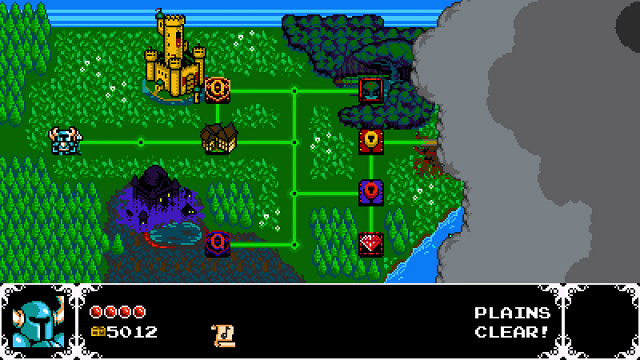
The game's mechanics are taught throughout the first tutorial level, which is already too fun to ever feel like such a thing. You are, unsurprisingly, a knight wielding a shovel. Use the tool to dig away obstacles and pogo bounce on enemies' heads. There's a world map, and new levels become accessible in bunches. Your goal: defeat each knight of the Order of No Quarter as you pursue the evil Enchantress, all while searching for your beloved Shield Knight.
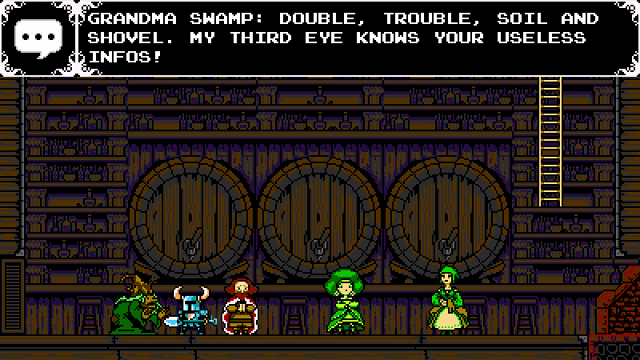
In a word, Shovel Knight is charming. It's full of lines like, "You're naught but a decadent dandy!" and there's a bouncy ball item called the "Chaos Sphere." Chester jumps out of chests to sell you the treasure inside. One frog-man exists solely to tell puns, and you get an achievement for listening to all of them. Someone had far too much fun with this game's writing.
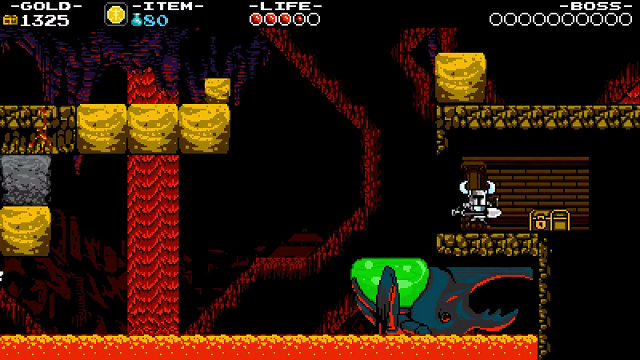
Secrets are hidden everywhere. None are particularly hard to find, but discovering them is always fun. This is exactly how exploration in a video game is supposed to feel. Have you ever played a platformer and thought, "I wonder if I can reach that ledge I'm not supposed to by jumping off of this one particular enemy?" Shovel Knight always rewards this kind of playful curiosity.
 Credit: Yacht Club Games
Each hidden passageway further pads your already overstuffed wallet. Every block, beetle, pile of dirt and destructible wall is just waiting to toss a few gemstones your way. Money can be spent on Relics (MP-using tools), equipment upgrades and a handful of other useful enhancements. Checkpoints can be broken for additional cash (a very cool idea). Even the punishment for death is financial: some of your gold flies out into floating money bags awaiting your return, but dying again will cause the first stockpile to vanish.
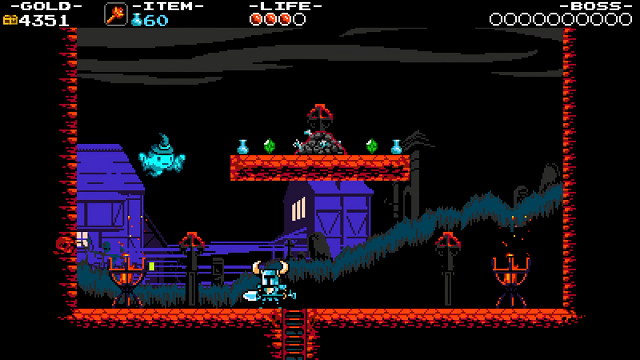
Shovel Knight's soundtrack is another big part of the game's allure. Catchy music is a key component of any retro indie title, but Shovel Knight's music actually surpasses many of its old-school inspirations. It's also written entirely within the NES' audio limitations, and features contributions from the legendary chiptune composer Manami Matsumae. Only Mega Man 2's OST can hold a candle to songs like Tinker Knight's theme, or the tune from the first Plains area.
But the game's crowning achievement is simply how good it feels to play. There's a certain tactility to shoveling through a dirt pile or catapulting off of an enemy's head that the development team absolutely nailed. Relics and special abilities are just as satisfying to use. It's a well-polished game, but rest assured that even more effort was spent on perfecting the raw core beneath that sheen.
 Credit: Yacht Club Games
So, for all of its strengths, why isn't Shovel Knight a 10/10? First, it has the typical Zelda problem: there isn't enough stuff to buy with your mountain of cash. For instance, the final few areas reward you heavily for breaking checkpoints, but there's no incentive to do so since by then you'll have nothing left to spend the money on. The literal cost of death helps to mitigate this issue, but adventurers with good footing will eventually find themselves too rich for Shovel Knight's world.
More specifically, the game wants for equipment upgrades. Shovel Knight can only wear one suit of armor at a time, and two of the six immediately available options are clearly superior to the rest. Your shovel can't be upgraded in terms of damage, range, or speed, either. It can gain abilities like "Ground Spark," which is nice, but falls well short of the RPG expectations all that money creates. It's unfortunate, since anticipating future equipment purchases could have been one of the most fun parts of the game. Alas, it's over almost as soon as it starts.
A second issue is that Shovel Knight is just too short. The first playthrough will probably run between 5 hours for people with social lives and 8-10 for completionists. Some levels have a few extra secrets to come back for, but in general they have next to no replay value. The stage design itself is excellent, and each one is lots of fun the first time through. It's just too bad there aren't more of them.
 Credit: Yacht Club Games
Still, it must be emphasized that these are minor problems with an otherwise fantastic game. Amongst a sea of 2D indie platformers, Shovel Knight stands out as the clearest communicator of its creators' love for the games they grew up with. Yet it's a modern take on that nostalgia, with borrowed mechanics from newer games, a goofy sense of humor, and 1080P presentation on current-gen hardware. I want to say that playing it feels like a trip back to the gaming days of yore, but Shovel Knight is actually a huge improvement over its predecessors. Perhaps the best endorsement I can give is this: after beating it once, the first thing I did was start a new file.