

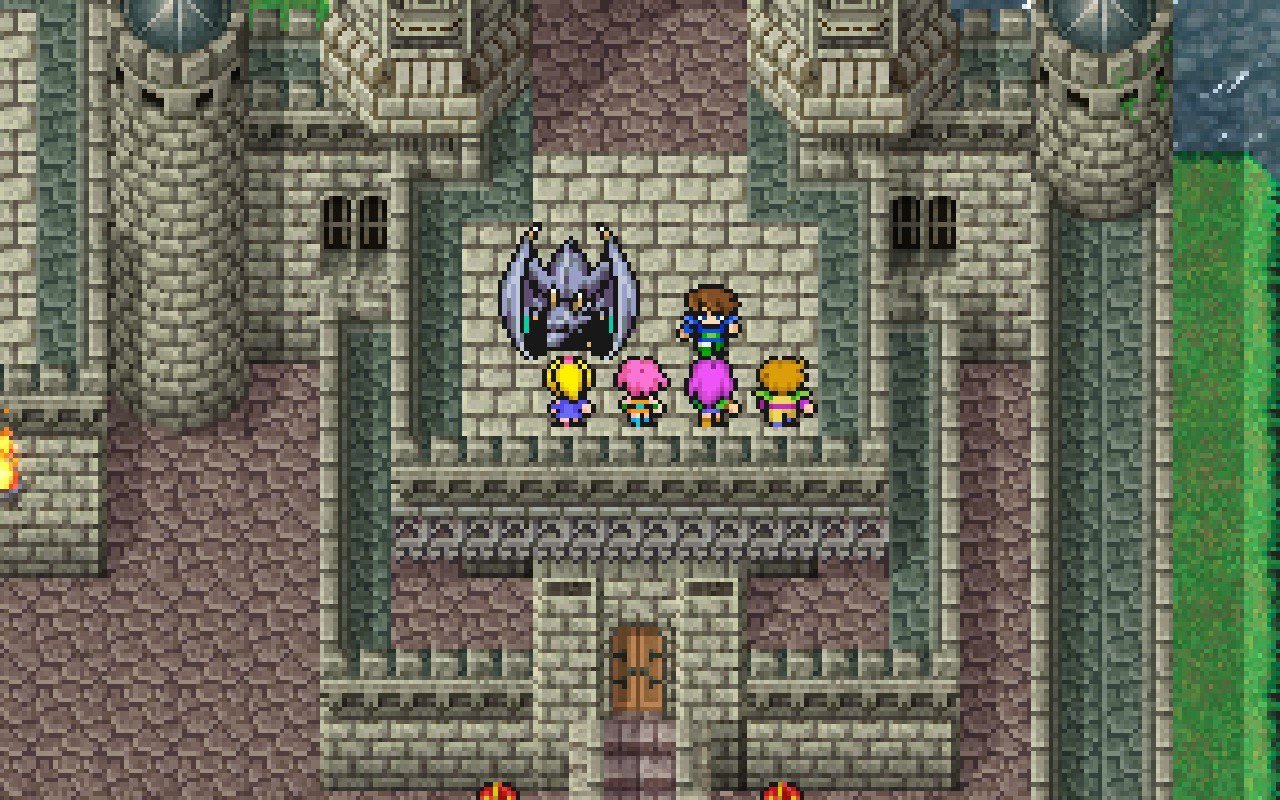
Final Fantasy V wasn't released outside of Japan until the late '90s. It's funny looking back at the reasons why it took so long for the rest of the world to experience it, as most resources reference its supposed high difficulty rating. In the grand scheme of RPGs, this one isn't that difficult. The perception that the US didn't like hard RPGs was allegedly the reason we ended up with Final Fantasy Mystic Quest, a roleplaying experience so simple it sat at the dead center of mediocrity—albeit with a soundtrack that absolutely slapped. The thing is FFV (which is what I shall be calling it henceforth so my fingers don't riot) isn't now and wasn't then a traditionally hard game. If anything, it was more time-consuming and addictive, mostly thanks to its core features..
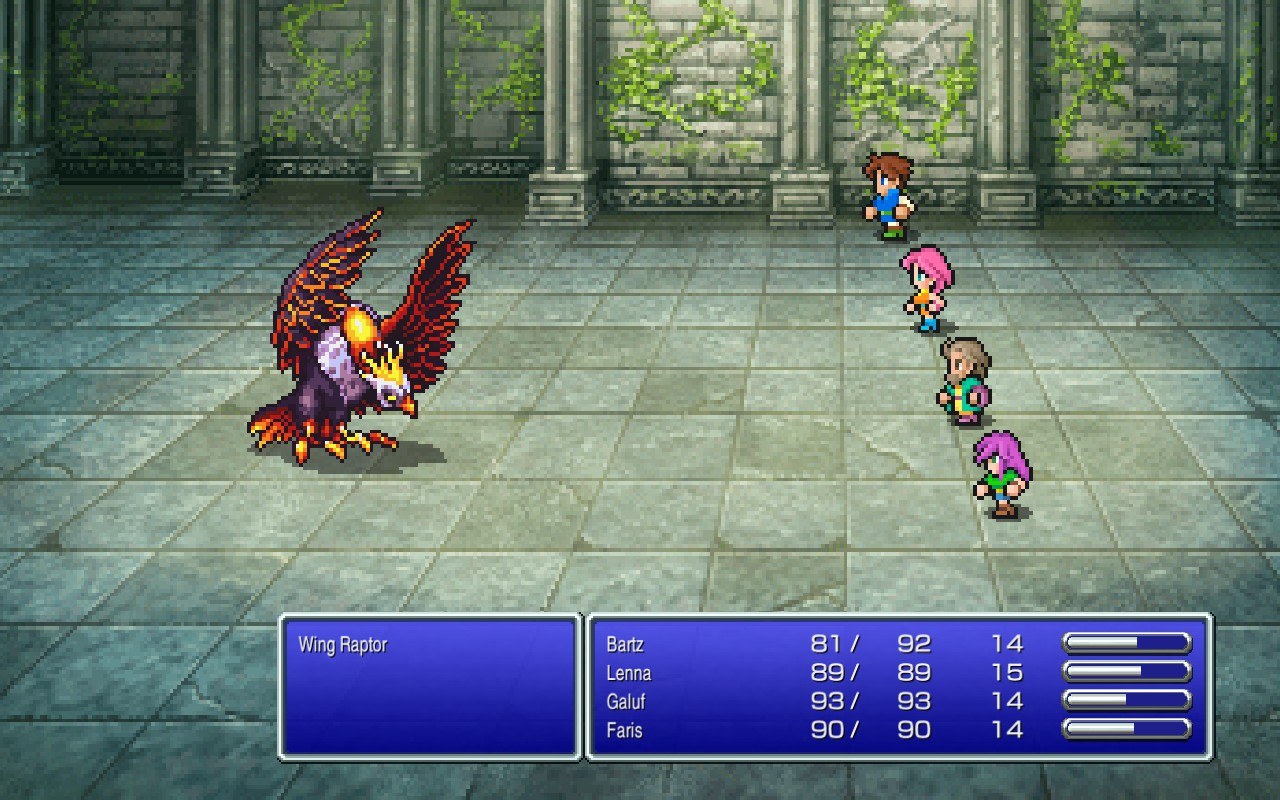
Yes, its combat system consists of your average menu-based commands, including “fight,” “item,” “defend,” and whatnot, plus a slew of random encounters with fantasy-based monsters like goblins and dragons. However, this one offers a revamped version of FFIII's definitive concept, the job system.
For the uninitiated, jobs work like classes in “Dungeons & Dragons.” They're a way of operating characters, granting them advanced melee capabilities, useful magic, or special skills like stealing goods from opponents or mixing consumable items for special in-battle effects. Yes, you still get the usual suspects like knight, white mage, black mage, thief, etc. However, now you receive jobs like samurai, which uses katanas and throws cash at enemies; chemist, who performs that aforementioned item mixing; beastmaster, who captures or controls enemies; and blue mage, who learns foes' spells.
 Credit: Square Enix
As your party wins battles, they gain ability points (ABP) that allows them to permanently earn secondary commands to equip. For instance, white mages learn various tiers of their own magic with each job level, granting them access to white spells even when they aren't given that job. Yes, this means a knight, a black mage, or a ninja can use healing and revival magic if equipped with such. You can pick and mix to your heart's content, creating combos like magicians carrying swords, dragoons throwing shurikens, or someone who can both steal items and summon monsters.
Some sections of the campaign call for special combinations, especially optional bosses and key battles. For instance, you have Atomos: a sentient interdimensional portal who progressively swallows your fallen comrades, rendering them unusable until the end of combat. Your best bet here is to figure out how to either maximize damage output or avoid his punishing spells. If you've got coins to burn, you could make an all-samurai team who throws money at the creature like middle aged guys at special bars. You could also go the dragoon route and spam the “jump” command, which temporarily puts you out of harm's way in exchange for a painful physical blow against your target.
However, most challenges require little brain power to figure out. Mainly, you lean hard into inflicting as much pain as possible, heal and/or revive when necessary, and use the occasional buff or debuff. All the same, the game offers so many variant combinations of jobs and secondary techniques that most of the enjoyment, and the main time sink, lies in mastering and experimenting with job combos even when basic ones will do. That might be where Square hesitated in regards to a worldwide release circa 1992. Perhaps they thought the abundance of choices was too much for other markets.
Plus the hunts for all the summons and blue spells offered appreciable side quests with some fantastic boss encounters. I'm a sucker for that kind of stuff.
 Credit: Square Enix
FFV's core elements succeed well enough that I haven't even gotten into its plot yet. Yeah, this is a Final Fantasy title where its story plays second fiddle to its mechanics, partly because the system is great for obsessive, “must maximize as much as possible” types like myself, but also because it story is straightforward. This one features a comparatively lighthearted adventure where a wanderer teams up with a bunch of princesses to fight a sorcerer born from an evil tree. There really aren't many frills or twists, except that a lot of side characters sacrifice themselves to keep the main entourage alive, almost as if they understand what's at stake...
The entire plot, in fact, focuses on the quartet either preventing the revival of or chasing down the main antagonist, Exdeath. In some ways, it plays out like a Saturday morning cartoon, where each plot beat forms a different episode in the saga, and the supporting cast are just there to sell toys. The protagonist, Bartz (formerly known as Butz—so he got the biggest upgrade of all) and company repeatedly travel to new locations, constantly finding out they're a hair too late. Either Golbez 2.0 Exdeath or one of his cronies predictably gets the drop on them, which makes sense because what good RPG ends with its villain failing halfway into their plans?
The game opted for a simpler story to focus on something more important: actual playing. This isn't to say the plot suffers. It's got plenty of dramatic sequences, from a pirate saying a final goodbye to her sea dragon friend multiple times, to another major character kicking the bucket in front of one of his family members. Death here isn't presented simply as way to extracting tears out of its audience. It's used to express different forms of love between characters, and also to emphasize the story's main theme of succession.
 Credit: Square Enix
FFV is, as any sequel, a successor. It wears its older siblings' qualities on its sleeve, giving us references to jobs systems, elemental crystals, legendary heroes with a light-based nickname, and long-sealed antagonists. It acknowledges its place as a just another number in what grew to be an enduring brand. The other games had to exist for this one to show off its power, and in some ways it almost points to FFV not having an identity of its own, while also using its lack of original content to create a distinct identity. Even the main quartet this time around serve as successors to warriors from within their own lore, further solidifying the inheritance theme.
There aren't a huge number of tweaks to this one's mechanics, really. You get some optional boosters to speed up ABP grinding, plus an ATB system closer to Final Fantasy VI's. Really, this version didn't need any correction or changes. You more or less get the original setup with minor updates and cleaner presentation because there really isn't much content that needed to change. In other words, the game that's all about successors and being a successor itself gets a worthwhile successor...


