
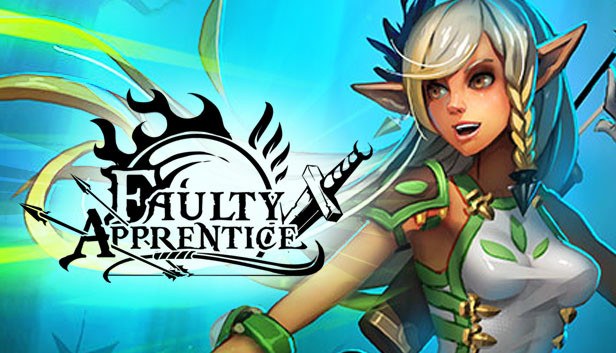
We see it all the time in the indie sphere: a project builds a massive amount of goodwill based on beautiful promotional art, a unique genre mashup, and a charming premise, only to completely fall apart the moment you actually have to play the damn thing. Faulty Apprentice is a textbook example of this phenomenon. It desperately wants to escape the passive, text-heavy stigma of the traditional visual novel by dressing itself up as a resource-management RPG. It hands you a sprawling castle to explore, a spreadsheet of stats to grind, and a literal ticking clock counting down to an apocalyptic battle. But once you strip away the bright colours, the self-aware jokes, and the provocative character designs, you are left with a painfully shallow gameplay loop that values your limited free time far less than it should.
You take on the role of a useless, clumsy protagonist who lacks any discernible skills other than an apparent talent for cleaning up after people. Through a series of comedic misadventures, you find yourself taking refuge in a grand fortress known as Starsreach Castle. The catch? The fortress is populated entirely by highly specialized, heavily armed, and distinctly attractive women. With a massive goblin siege looming exactly twenty days in the future, the narrative gives you a blunt ultimatum: you must choose a mentor, train your stats from absolute zero, assist with chores around the courtyard, and somehow convince these elite warriors to fall in love with you before the castle walls are breached.
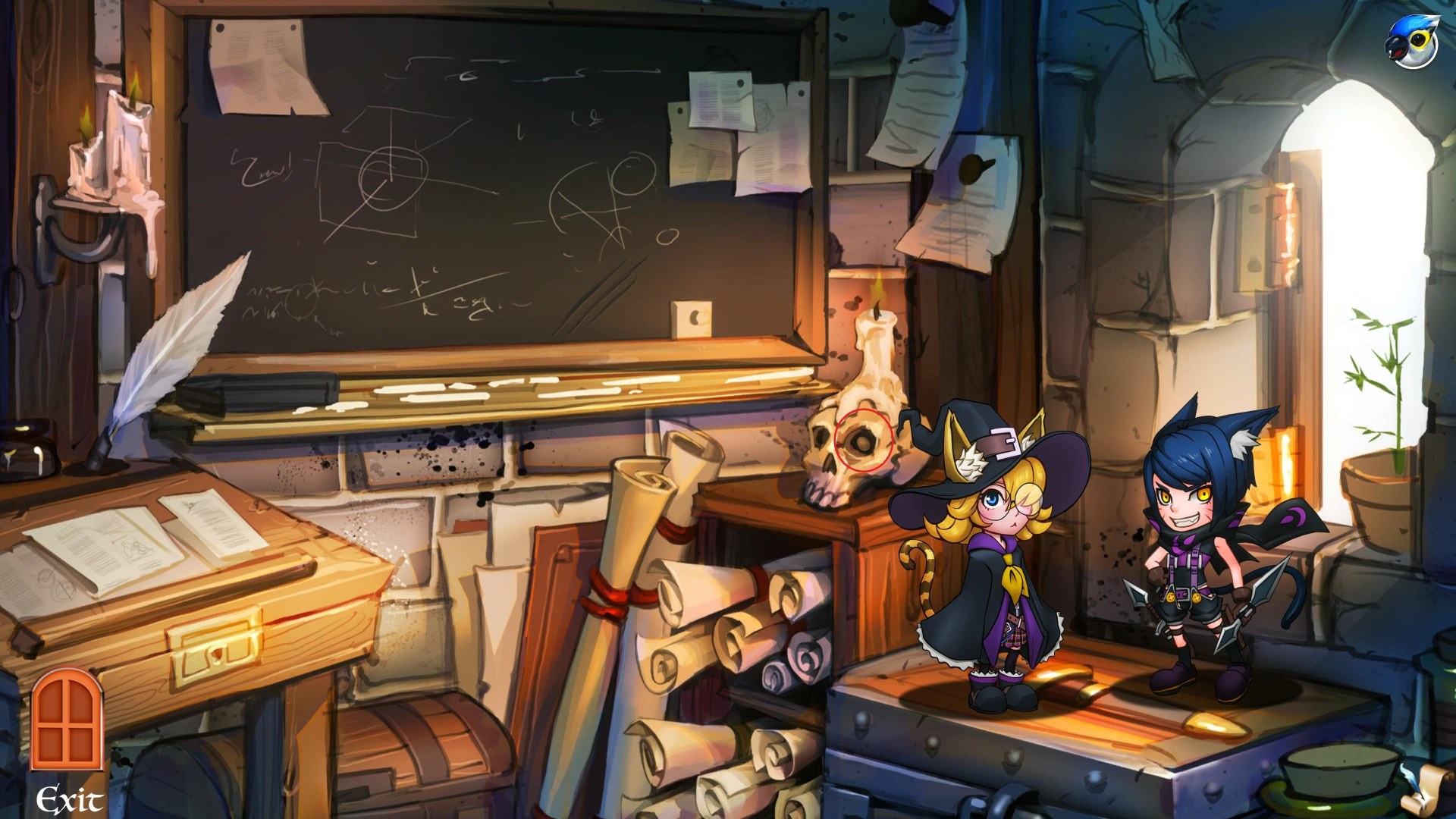
To give credit where credit is due, the game’s biggest selling point is undeniably its visual presentation. The hand-drawn character sprites are lively, expressive, and brimming with personality. The art style hits a highly commendable sweet spot between western animation and classic anime, offering a vibrant aesthetic that immediately catches the eye. If the developer's sole goal was to create an appealing digital pin-up gallery wrapped in a lighthearted fantasy narrative, Faulty Apprentice would be a resounding, unqualified success. The dialogue is snappy, the jokes land more often than they miss, and the various character archetypes - ranging from fierce shield maidens to mischievous monster girls - have just enough subversion to their tropes to keep you interested in what they have to say. The writing team clearly had fun building this world, and for the first hour or two, that enthusiasm is infectious.
 Credit: AGL Studios
But a video game cannot live on good sprites and witty banter alone, and Faulty Apprentice completely collapses under its own weight the moment you try to engage with its structural systems.
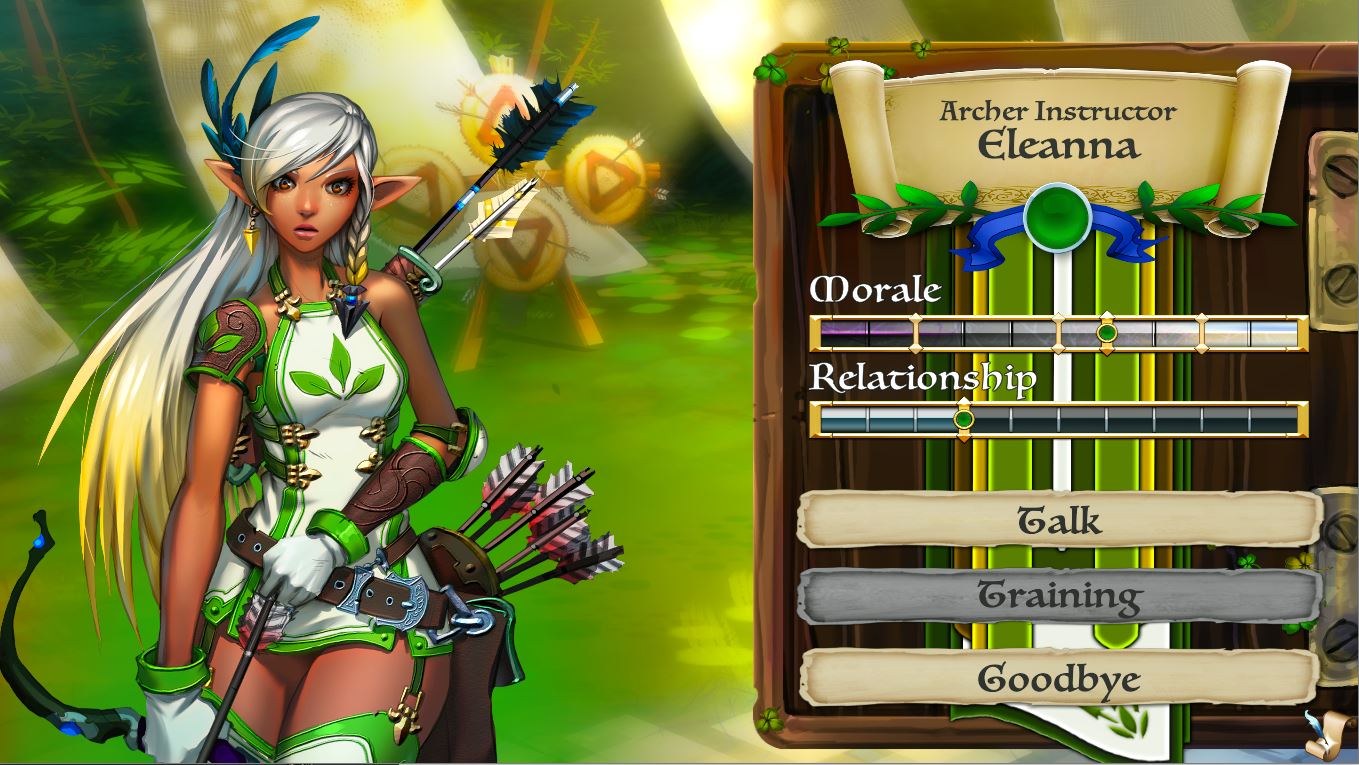
Your day-to-day progress is entirely dictated by a series of agonizingly basic mini-games. Want to increase your strength stat so you can swing a sword? Get ready to play a rudimentary, slow-paced rhythm game. Want to raise your intelligence so you can understand magic? I hope you enjoy playing a barebones game of memory match. These segments do not feel like clever testaments to player skill, nor do they offer any real mechanical depth; they are mandatory speed bumps designed to artificially pad out the game's length. Because the entire experience operates on a strict twenty-day calendar with a limited pool of action points per day, your entire schedule ceases to feel like an organic adventure. Instead, it becomes a clinical, soul-crushing math problem. You aren't organically exploring a living castle or building nuanced relationships with its inhabitants; you’re aggressively optimizing a spreadsheet to maximize numeric values.
The penalty for failing to optimize this spreadsheet is incredibly severe, exposing the rigid linearity hiding beneath the game's illusion of choice. If your specific stats are not high enough by certain predetermined story checkpoints, the narrative does not adapt or offer a compelling failure state. Instead, the game simply stops. You are treated to a sudden, unceremonious "Game Over" screen that completely invalidates your progress, forcing you to reload an earlier save file and repeat the exact same mindless mini-games all over again. For a genre that traditionally thrives on player agency, branching narratives, and organic discovery, Faulty Apprentice feels suffocatingly restrictive. It forces you to play by a very specific, unforgiving set of rules, yet the actual acts of training and working jobs are so inherently boring that the punishment feels entirely unearned.
 Credit: AGL Studios
This fundamentally broken design utterly cripples the game's replayability - which specifically hurts a game with a time limit attached. A good visual novel makes you excited to restart the journey, eager to make different choices and see how a completely different character's route unfolds. Here, the mere thought of sitting through the exact same archery, swordplay, and magic mini-games for another three to four hours just to unlock a different set of final dialogue boxes is actively exhausting.
Ultimately, Faulty Apprentice has all the visual polish it needs to look great in a trailer, but its foundational mechanics are built entirely on sand. It tries to bridge the gap between a casual visual novel and a hardcore management sim, but by compromising so heavily on both fronts, it fails to satisfy either audience. If you’re deeply desperate for the art style, you are much better off purchasing an artbook or looking up screenshots online.


