2005’s “Fahrenheit” or “Indigo Prophecy” (the latter was the name given to the censored version released in the USA and other countries) was marketed as the first interactive film. At a time where few games dared to be like movies, David Cage (who was lead director and writer) aimed to bridge the gap and show that video games can also tell deep and meaningful stories. Whether Fahrenheit actually did this successfully is up for debate, but what’s known for certain is that David Cage changed the landscape of video games in a huge way.
The idea that this game is indeed a movie or movie-like experience is reinforced several times. As soon as you launch the game you’re greeted with a main menu with several options. One of them happens to be “New movie”, and when you hover your cursor over the option, a billboard with the game’s title appears on your screen. When you decide to start a new game: your screen becomes permanently letterboxed (which once again gives you the impression that you are watching a movie). This game desperately wants for you to think it’s a movie but thanks to the intuitive controls and surprising amount of gameplay, you’re greatly immersed in this adventure.
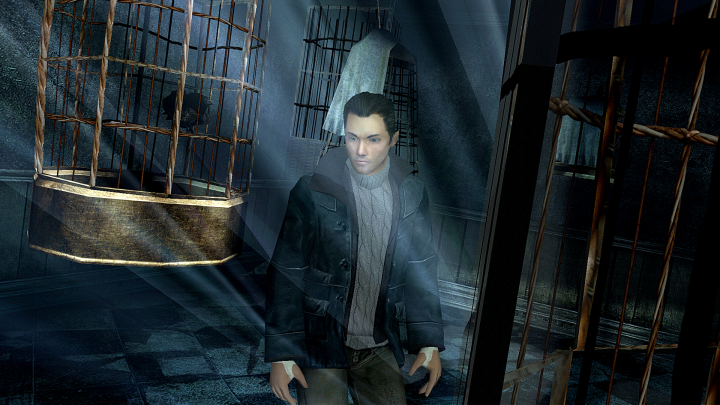 Credit: Aspyr/Quantic Dream
Controls are a pretty simple affair. The WASD keys move your character around whilst left-clicking and swiping your mouse is needed to interact with objects and other people. This all feels very natural and you can even just hold right-click and left-click at the same time and use your mouse to move the character instead. In-between regular cutscenes are action scenes which are essentially long QTE sequences. There is a hell of a lot of QTEs in this game, which some have likened to a game of “Simon Says”, and they can be quite annoying unless you stick with them. It’s arguably Fahrenheit’s biggest flaw and I had to warn you all in case someone comes to my house and kills me for recommending this game. There are also lots of choices to make, which directly ties in with the game's mood mechanic (certain options or a combination of them will either make your character happy or send them into a depression), but the game is ultimately a linear experience in the end and this mechanic is not as irritating as it sounds.
Fahrenheit’s story on the other hand, is harder to judge fairly. Fahrenheit has arguably one of the best intros in all of video games - and there’s so much potential - but by the time you’ve reached the end of the game: the tone, pacing and story has changed so dramatically and so quickly too. This is sadly due to the fact that this game was meant to be part 1 of a trilogy, but at the last minute this plan was ditched… and the developers tried their best to conclude the game with what they had. It’s not a terrible ending, but most players will definitely be left confused after thinking that this was a crime-thriller title. I guess this is why Fahrenheit has become a cult classic.
Even as a huge fan of this game I have to admit the writing from French developers “Quantic Dream” is pretty hit and miss. One character named Tyler (who is African American) is treated in such a stereotypical fashion which undermines the serious tone of the game and David Cage’s intent to honestly tell a deep and meaningful story. Tyler has become something of a running joke in the Fahrenheit fan community but I guess it’s just another one of those things that led to this title becoming a cult classic. All of this aside, Fahrenheit’s story is still decent for me and there’s some truly epic moments sprinkled throughout. I really felt what the characters were going through at certain times (this can be attributed to some of the great tracks in this game) and most of them were relatable to me because their situations often had them doing mundane tasks.
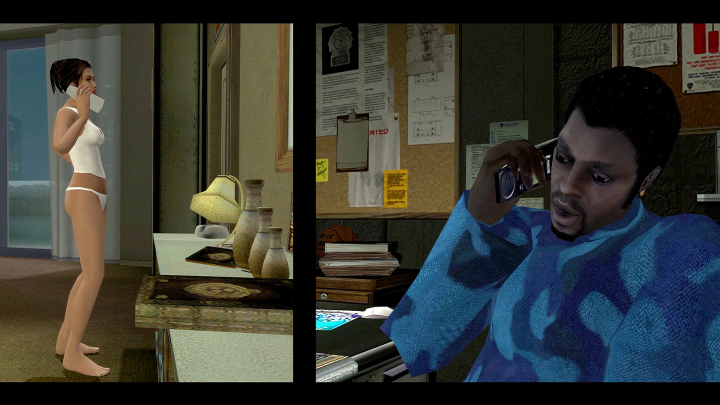 Credit: Aspyr/Quantic Dream
As for the remaster done by Aspyr: most of the texture work is subtle. There’s a minor facelift throughout but in some areas the original textures might be preferred. Thankfully there’s an option to change from remastered textures to original at any given time (via a single button press) which is pretty cool. The QTE buttons that appear on your screen have also been slightly changed in both appearance and size (they’re much larger now). It's worth noting that Fahrenheit: Indigo Prophecy, which is the name for this remaster, is also the uncensored version of the game which very few countries ever got. Another plus in my book. The game hasn’t aged really well but apart from some minor screen tearing, which I only noticed on my last playthrough and may not have been the game's fault, it worked just fine on my PC. I wish Aspyr did get to change the models in Fahrenheit but apparently they didn’t have access to much of the original game’s art pipeline.
Obviously I’m a bit biased when it comes to Fahrenheit but I’d still recommend it to anyone who is in the least bit curious about the title. It’s a quirky, unique game and for the price of $10 you really haven’t got much to lose.