


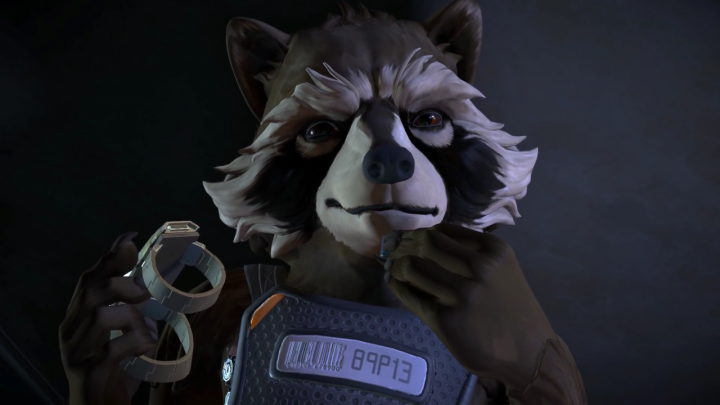
Marvel’s Guardians of the Galaxy: The Telltale Series - Tangled Up in Blue is still a ludicrous name for a video game (seriously; I have to keep typing these things), as well as a pretty middling entry with which to start a series. It began where most games end--with the defeat of the end boss, Thanos --and then asked what a group of heroes are supposed to do with their lives once their epic quest is finished. But it felt so hurried and disconnected as it rushed from one forced plot point to the next, all in an effort to set everything up for the next wave of episodes.
Marvel’s Guardians of the Galaxy: The Telltale Series - Under Pressure is an equally silly name (and one with a soundtrack not graced by either Queen or Bowie, to boot), but a significantly subtler experience. Not featuring the grand set piece battles of the first, it takes the time to dial everything down a bit so there's actually time to explore how the characters might behave in a post-Thanos galaxy.
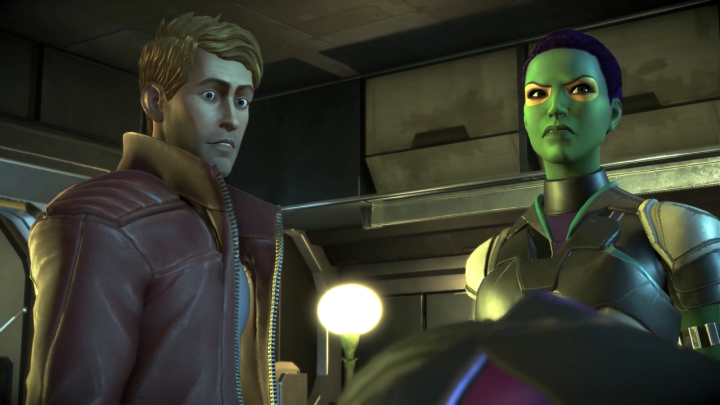
Drax is struggling to find a purpose, now that he has finally wrapped up his grand quest for vengeance, and is questioning his place in the world and whether the team still has any need for him. Gamora has to deal with the difficult issue of killing her adopted father, along with her attempts to repair the fractured relationship with her sister after that particular bout of patricide. Groot is, well, Groot. Go ahead and ask him; he’ll tell you so.
Which leaves Rocket, king of snarky put downs and disliker of all. Early in the game, you’re given a choice wherein you can either follow Gamora as she tries to untangle some of the complicated issues that have estranged her sister, Nebula, or you can follow Rocket back to the world on which he was born. Or, at least, created. Neither of these choices is wrong, and both of them provide you with a look into each character’s past, but the Rocket path feels more significant. Perhaps that's because Gamora talks about herself more openly and doesn’t hide the entirety of her history behind a wall of snarling hostility. In any event, seeing how Rocket came to be certainly helps give context to some of his actions.

When it is providing such context, Under Pressure finally starts to distinguish itself from the overly busy Tangled Up in Blue. Without a dozen plot threads to try and set up all at once, or elongated quick time events to pimp out, Guardians of the Galaxy takes advantage of its strong cast. It lets you poke around in their pasts in a manner that is often both touching and engaging. Even when it does stray from building up individual crew members and makes a play at an action sequence, the result is a far more laid back affair much more in keeping with the licence, with Quill’s infamously retro musical tastes providing welcome accompaniment. The episode even manages to show some of the consequences of your past actions: a big choice in the first chapter pertaining to who receives the remains of Thanos gives you completely different scenes when you find yourself trying to foil a third party’s attempt to reclaim his massive corpse.
Telltale puts its faith in the notion that the gamer’s connection with the Guardians themselves will be enough to fuel the episode, and that assumption has been proven correct. There’s a time and a place for large scale battles that ask you to mash Q to win, but first taking the time to ensure you care about the people taking part in those moments makes them much more significant.






Marvel’s Guardians of the Galaxy: The Telltale Series - Under Pressure is an equally silly name (and one with a soundtrack not graced by either Queen or Bowie, to boot), but a significantly subtler experience. Not featuring the grand set piece battles of the first, it takes the time to dial everything down a bit so there's actually time to explore how the characters might behave in a post-Thanos galaxy.
Drax is struggling to find a purpose, now that he has finally wrapped up his grand quest for vengeance, and is questioning his place in the world and whether the team still has any need for him. Gamora has to deal with the difficult issue of killing her adopted father, along with her attempts to repair the fractured relationship with her sister after that particular bout of patricide. Groot is, well, Groot. Go ahead and ask him; he’ll tell you so.
Which leaves Rocket, king of snarky put downs and disliker of all. Early in the game, you’re given a choice wherein you can either follow Gamora as she tries to untangle some of the complicated issues that have estranged her sister, Nebula, or you can follow Rocket back to the world on which he was born. Or, at least, created. Neither of these choices is wrong, and both of them provide you with a look into each character’s past, but the Rocket path feels more significant. Perhaps that's because Gamora talks about herself more openly and doesn’t hide the entirety of her history behind a wall of snarling hostility. In any event, seeing how Rocket came to be certainly helps give context to some of his actions.
When it is providing such context, Under Pressure finally starts to distinguish itself from the overly busy Tangled Up in Blue. Without a dozen plot threads to try and set up all at once, or elongated quick time events to pimp out, Guardians of the Galaxy takes advantage of its strong cast. It lets you poke around in their pasts in a manner that is often both touching and engaging. Even when it does stray from building up individual crew members and makes a play at an action sequence, the result is a far more laid back affair much more in keeping with the licence, with Quill’s infamously retro musical tastes providing welcome accompaniment. The episode even manages to show some of the consequences of your past actions: a big choice in the first chapter pertaining to who receives the remains of Thanos gives you completely different scenes when you find yourself trying to foil a third party’s attempt to reclaim his massive corpse.
Telltale puts its faith in the notion that the gamer’s connection with the Guardians themselves will be enough to fuel the episode, and that assumption has been proven correct. There’s a time and a place for large scale battles that ask you to mash Q to win, but first taking the time to ensure you care about the people taking part in those moments makes them much more significant.