


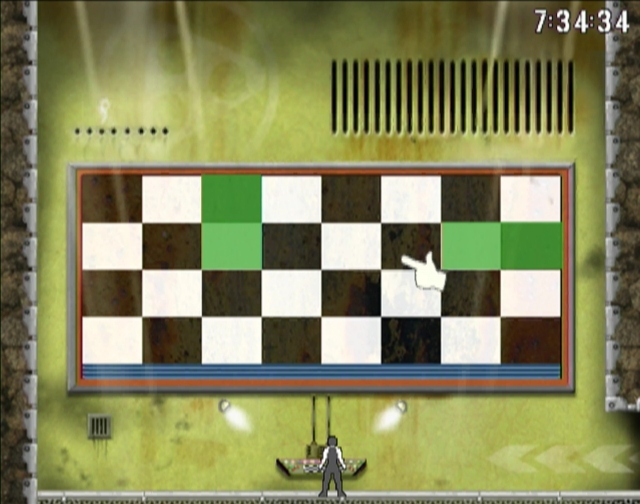
Impossible Mission is an old Commodore 64 game that originally released in 1985. Developed by Epyx, the company perhaps best known in North America for California Games, the title puts players in the virtual shoes of an intelligence agent trapped in an island complex. Your goal as that agent is to stop an evil scientist from arming and firing nukes. At the time, the blend of puzzles and action must have been something special. I can’t really say. I was too busy playing with LEGOs.
On Wii, more than 20 years later, Impossible Mission isn’t quite so special but could still appeal to a certain crowd. The development team at Broadsword Interactive kept close to the script for the 2007 update, which itself has now become rather long in the teeth (hence my ease in acquiring a new copy for under $10). The faithfulness to the original edition is admirable in most respects, but the result is a package that’s not a whole lot more aesthetically pleasing or refined than the ancient Commodore 64 release. By today’s standards, it’s mostly engaging only if you’re in a decidedly retro mood or perhaps feeling nostalgic for a forgotten classic of yesteryear. Even then, there’s probably not enough to the package to keep a person properly entertained for more than a couple of hours. A digital release would have made more sense.
But whatever. System 3, the game’s publisher in Europe, apparently planned to revive a number of beloved Epyx properties. Impossible Mission was intended as merely the first of several adaptations. California Games would have been the follow-up and is even promised in the instruction manual, but it was eventually canceled and System 3 has mostly limited its subsequent output to racing and pinball titles. Perhaps the world just wasn’t prepared for something so… Epyx?
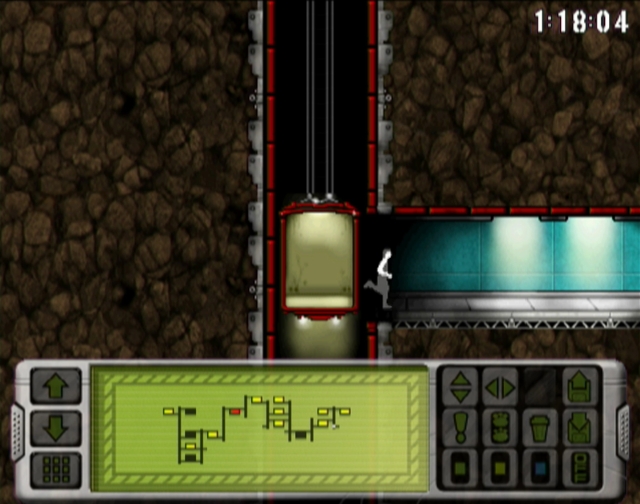
Let’s assume for a second, though, that you’re not ready to give up on Impossible Mission as quickly as most consumers apparently were. What does your potential investment get you? As I alluded previously, not much. You are granted access to three versions of the same rather brief game by way of the New, Classic and Merged modes. As far as I can tell, they share the same exact play control—which makes sense, given the original design’s fixation on precise platform placement—but the New mode adjusts the timer and leaves useful marks on your mini-map once you have searched a room’s contents. You’re also able to choose between one of three protagonists, though any differences appear to be cosmetic only. Again, that makes sense because of the core design.
The general flow of the game is quite basic, as you would expect of a title originally coded before many of today’s avid young gamers were out of diapers (or in them, for that matter). You appear in an elevator shaft and the aforementioned mad scientist taunts you over an intercom. Then you have 6 or 8 in-game hours to check for intel, which you can find in desk drawers, secreted underneath furniture, or hidden in any other pieces of the architecture that catch your eye. The whole facility is capably guarded by robots and sentries. To get out of the nightmare scenario alive, you’ll need to avoid their detection, or temporarily put them to sleep by typing commands at the various terminals. That particular approach is only possible if you have the necessary passwords, though, which you can acquire in certain rooms by playing a tone-based memory game that requires you to arrange a number of tiles according to the musical pitch they produce.
The hero moves quite stiffly throughout the whole affair, not unlike the prince character from Prince of Persia. He can actually leap quite far, even from a stationary position, but any jumps need to be timed carefully so that they don’t send him plummeting into a pit or (more commonly) into the face of a robot that is firing an electrical charge. Dropping into a gap along the bottom of the screen chops precious seconds off the timer, as do any brushes with the patrolling sentries. There is a lot of ground to cover and not much time to do it, even under perfect conditions, so you’ll need to grow familiar with any control quirks if you want to get far. Patience always serves you better than haste does, since a number of the more difficult chambers demand precise leaps and timing. You’re often required to get close to a robot and then jump over him or dash by him during a very limited window of opportunity.
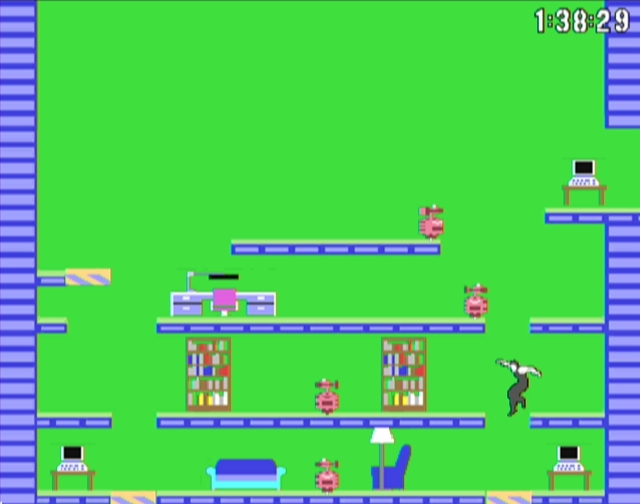
For the most part, even though they don’t look especially great, the visuals get the job done regardless of the mode you choose. The Classic version of the game featured a lot of primary colors and still looks rather nice today, provided you harbor a minimum level of affection for minimalism. The New version adds textures that do a better job of painting the picture of an underground laboratory, though sometimes the searchable areas stand out a bit less. Neither option looks great on a decent sized LED monitor. It’s a shame System 3 didn’t commission the remake a few years later. I can imagine it all looking quite nice with HD textures, but instead things are rather blurry in general.
A more pressing concern, however, is the lack of replay value once you figure out how to solve the various rooms. Their arrangement may be shuffled around each time you play, but ultimately you’re still wandering a complex comprised of the same chambers and your suggested actions within those chambers remain constant. Your only motivation to keep playing after that is the pursuit of the high score, or you can select a higher difficulty level. It’s possible to play through a few times over the course of a single hour, though, and I honestly can’t imagine most people caring to clear the game all that many times when there’s no convenient way to boast about any accomplishments online.
In spite of my various complaints, though, I’m glad that System 3 revived this particular title and I’m glad it found its way to my collection. It offers a limited experience but I still had a bit of fun and believe my investment was justified. If you’ve ever wondered what Impossible Mission is like to play, this may be your last chance to satisfy that curiosity without resorting to emulation. If only California Games could have happened too…