

 Credit: From Software/Bandai Namco
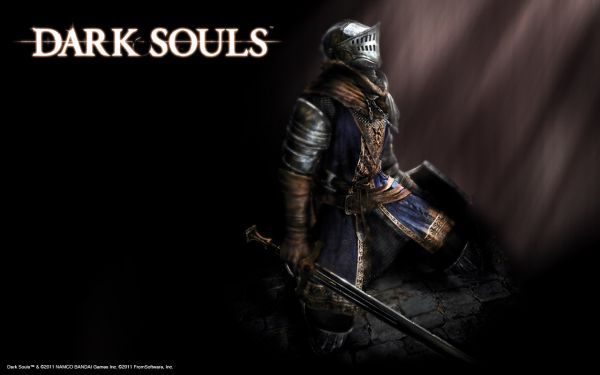
Lordran is a harsh realm. Its introduction involves escaping a crumbling asylum guarded by a militant, bariatric demon. From there a mammoth crow carries you to Firelink Shrine miles away, leaving you in an unforgiving environment without a clue as to where you should head. Even the few NPCs in your vicinity are unhelpful or, at best, vague. To hell with them! You decide to chart the maddened country on your own, perhaps even blaze your own trail. Besides, it's the journey that counts, right?
Right...?
Here's the thing with Dark Souls: it doesn't care, it doesn't like you, it absolutely hates your spunk and enthusiasm, and it wants you dead. It might cause you to think that perhaps we've gotten it wrong all these years. We've fallen so in love with video games that we've forgotten that they control the enemies and host the segments that frustrate us. Dark Souls also doesn't pretend to be adorable or upbeat, but exudes repulsion. It thrusts you into a gloomy setting filled with gruesome monsters and places you at every disadvantage you can imagine, all in an effort to make you lose your mind (remember, you did start this game in an asylum). If you're like me, though, you'll eat up every minute of going slowly insane.
 Credit: From Software/Bandai Namco
Dark Souls's first cruel measure is to trick you into blazing the wrong trail. Without foreknowledge or a FAQ, you might stumble into a graveyard, where myriad skeletons chop you to bits. It's likely you'll choose a different path after that and possible you'll discover a stone elevator that takes you to subterranean ruins. This might seem welcoming at first, what with the abundance of creatures that loiter about and allow you to kill them. However, you eventually reach a point where invulnerable ghosts one-shot you before you can blink. A brief check of the area reveals another elevator that takes you to a valley composed rickety bridges and tight walkways. All around you is an eerie stillness that belies simplicity, which shatters when you aggro a wyvern and die via electrified breath. One last sweep of the valley takes you to a ramshackle stage constructed of rotting scaffoldings and ladders. Sadly, you probably won't set foot on a single wrung, as a diseased barbarian caves your skull in with his club.
When you find the "correct path," the game's hatred does not falter. It throws you enough simpletons to make you feel like a champion, with their souls (read: currency and experience) serving as a reward for each death. Then it brings you down by adding bomb lobbers, snipers, and lancers to the fray. Survive them and you could descend the wrong staircase, thereby pissing off a dark knight who just wrecks you. Dust yourself off and you might reach a tower. Take a stairway down and you'll enrage a mid-boss named Havel the Rock, who smashes you more effectively than the dark knight ever could. You respawn, you take the stairs opposite Havel's, and suddenly you're fighting a minotaur boss. You barely win the brawl and then mosey on to a lengthy bridge with the prospect of a checkpoint on the other side.
...and then a dragon flies by and bathes the bridge in flames. The now-familiar YOU DIED pops up to taunt you.
 Credit: From Software/Bandai Namco
Perhaps you'll eject the disc and snap in half. However, if you're like me you'll find a way to cope with the loss of your souls. You can always recover them, sure, but there's a chance you'll be obliterated again by your previous killer, thus losing the souls for good. Remember: this game doesn't like you. In response, you should despise it back by kicking its sorry teeth in. You see, there exists one more facet of Dark Souls that's just as important as risk and reward and coping with defeat: change. Kick down a ladder and it stays down. BAM! Instant shortcut, and now you can bypass all of the goons who wear you down before you reach a boss. Drain the water of New Londo Ruins and it shall remain clear, allowing you to explore the once drowned sections of the map. The alterations you make the world are binding, and feel like you're giving the game a meaty finger each time you activate a change.
So you annihilate foes, you level up, you access shortcuts, you hunt the best equipment you can find, and you upgrade your duds and arsenal like crazy. You learn to time your tuck-and-roll maneuver or practice blocking. You carefully consider which statistics to boost since the game caps at level one hundred, effectively giving you a finite number of stat increases. A cold fear lingers in the back of your head that you might incorrectly build your character and permanently screw yourself over. Still, you persevere and attempt scenes repeatedly, taking it from the top each time. Soon enough, you realize that you're practically dancing all over the battlefield, serving artery-gashing slashes with grace. And just as you've overcome the impediments before you, fresh ones appear from the haze and take you down a peg.
Time and again, you'll engage in the rigorous schedule described above, impeded only by Dark Souls's desire to wreak misery. The adversity motivates you to fight, which inspires you to triumph. While soaking in that strife-tempered victory, you can gaze down upon Dark Souls and gloat about your peerless gamer skills.
.....never mind that you died eighty times up to that point.....
 Credit: From Software/Bandai Namco
Of course, the game still has a few tricks up its sleeve, mostly in the form of devastating bosses. Yeah, you can survive the tremendous boulders of Senn's Fortress and give the Hellkite Wyvern the slip, but can you best the guards Dragonslayer Ornstein and Executioner Smough? Battling these two is quite the task. While you set your sights one, the other blindsides you with a skewer or crushing blow. Perhaps you can best the basilisks of the Depths, but can you survive against horrors deep within the earth: a woman turned lava-belching half-spider named Quelaag, a horrifying mix of arthropod and abomination aptly called Centipede Demon, and unforgettable encounters against Bed of Chaos and Seath the Scaleless, two major bosses whose souls unlock the final stage.
Although I'm not into online play in most games, Dark Souls makes terrific use of such a function. Now and then you can read notes left by players, some of which help you to prep for oncoming perils or let you know when there are goodies to be had nearby. It also plays a tremendous role in the game's "risk and reward" rule system by allowing other players to "invade" your game and attempt to kill you. This, of course, only happens if use an item called "Humanity" to reverse the effects of becoming hollow (read: undead). The trade off is that becoming human again allows you to summon phantoms to aid you in combat. Of course, this means you can also beef yourself up and become a player killer by invading other people's games and slaying them for hefty rewards.
All of it adds up to a memorable gaming experience. Dark Souls is the NES era's legacy and a stunning reminder of a few trite sayings. The journey is grander than the destination, the fight itself is more heart-pounding than its conclusion, and the struggle to summit the campaign is what makes it all worthwhile. Sometimes there is no greater entity to play with than an adversary, and you'll find few opponents tougher than Dark Souls.