
 Credit: Rare/Nintendo
Immersion is something I look for in any game, yet it is an element that is nebulous in meaning and subjective in effectiveness. When one thinks of an immersive game, he may think of walking simulators like Journey or Firewatch. I, however, think of not just a work's atmospheric audio-visual design, but also the work's ability to seize my attention, and Donkey Kong Country is an early example of a game exceeding at both.
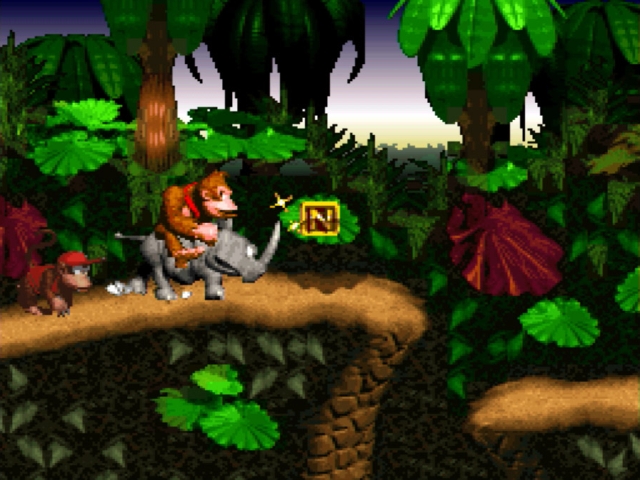
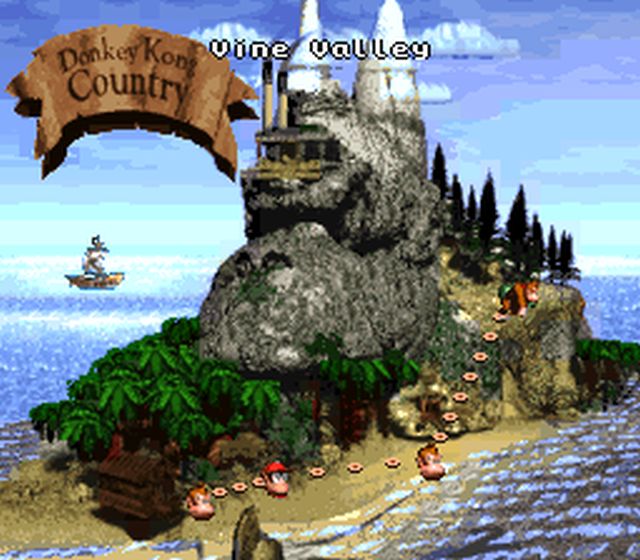
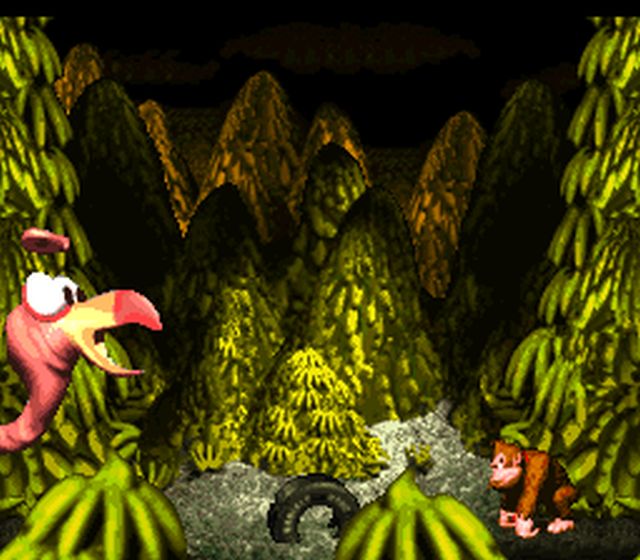
Donkey Kong Country is a platformer that is simple in the best sense: unobtrusiveness. You've a basic setup -- DK got his banana hoard stolen -- that by no means gets in the way of the aesthetic verisimilitude of the setting, a fantastical island filled with a variety of wildlife and climates. A silly intro depicting Donkey Kong as being hipper than the ancestral arcade game that spawned him not only transports the modern player to the era when everyone had to be as stylish as Sonic, it sets the stage for this tongue-in-cheek setting that can accommodate the variety of unique elements in each level.
 Credit: Rare/Nintendo
 Credit: Rare/Nintendo
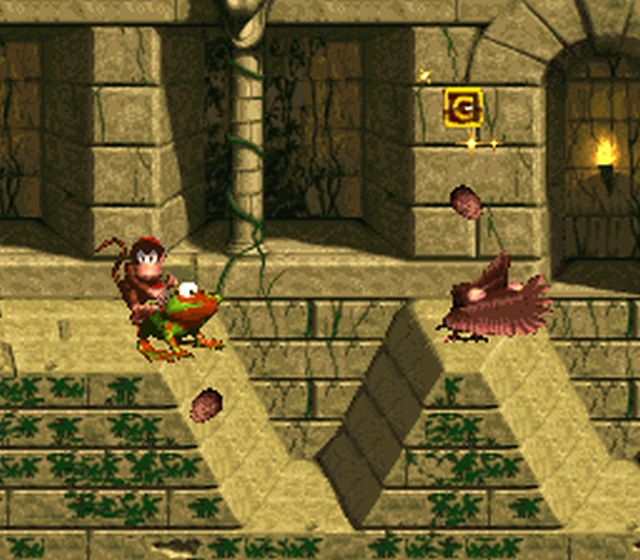
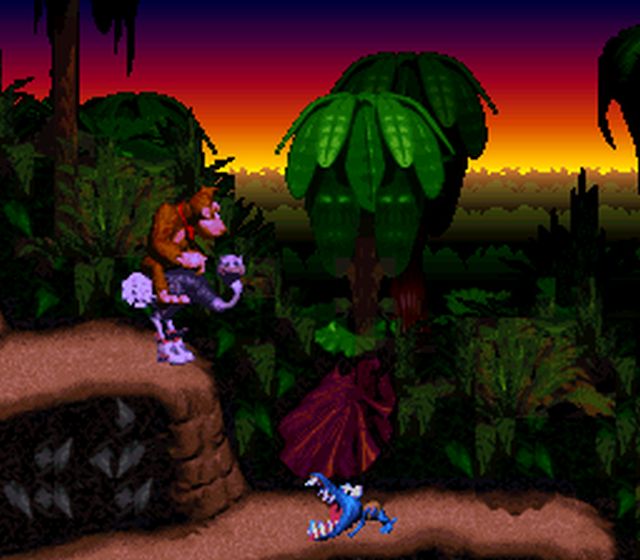
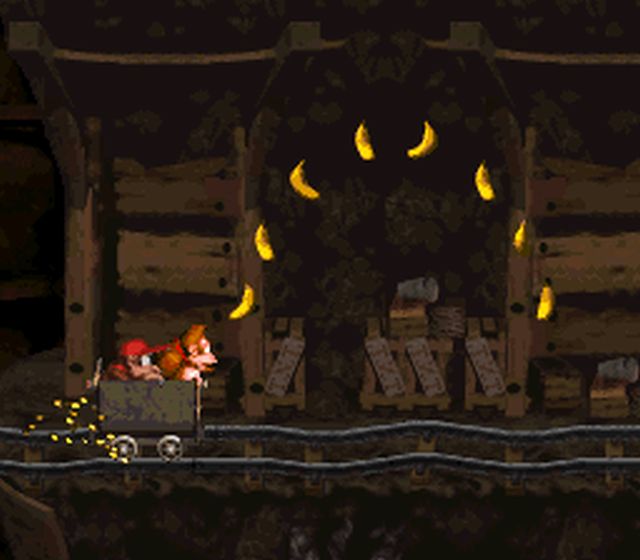
Mine cart rides, barrel cannons, and mountable animal friends are all outlandish elements that could prove confusing when popping up in less clearly defined aesthetics, yet feel right at home in the goofy setting of DKC. These gameplay mechanics must be in the game to make up for the rather barebones minute-to-minute gameplay; run right and jump when needed. The foundation is solid, however; both the weighty Donkey Kong and nimble Diddy Kong have complete air control during jumps, meaning that the game's difficulty is not the faux-challenge of the unresponsive Castlevania III, but a true task rewarding reflexes and timing.
Each stage tends to have a unique gameplay quirk (such as new enemies and the aforementioned outlandish elements), introduced early in level and becoming more fleshed out as you progress. The player is usually introduced to one of these in a safe environment, an experience of discovery. Some of these elements, such as a stoplight to pacify invincible foes, appear suddenly only to allow a new gimmick to take the stage; the effect of this is that the player becomes more invested in seeing what DK Island has to offer. And there's plenty on display.
 Credit: Rare/Nintendo
 Credit: Rare/Nintendo
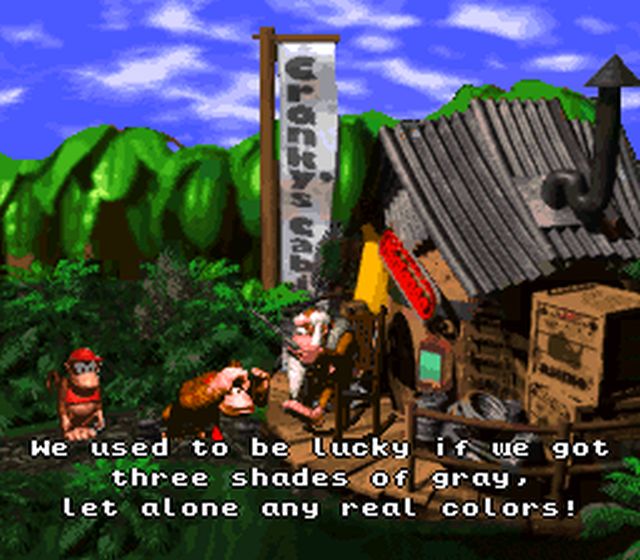
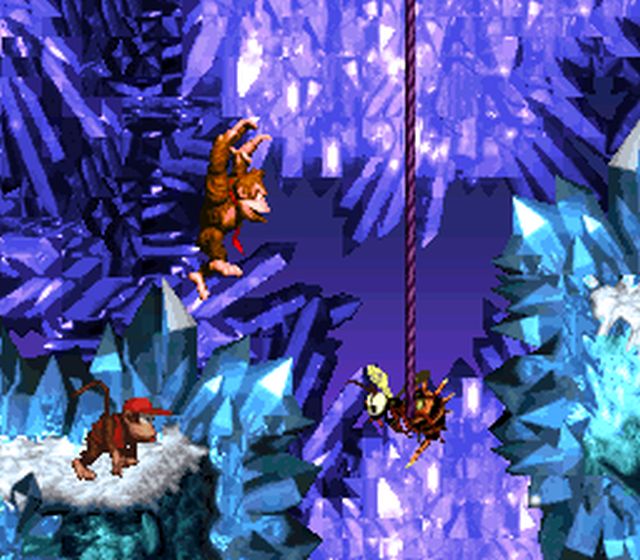
Few games have been as technologically ahead of their time than Donkey Kong Country. While it's pseudo-3D aesthetic may not appeal to those who take the craftsmanship for granted, the rest of us can appreciate not only the effort and attention to detail of the game, but also the texture of the world itself, which is made all the more immersive by the HUD obscuring it only when needed. Gradient day/night cycles, snow effects, shimmering water; dynamic swinging lights in the mines; no matter when you're from, there's something to enjoy here. The audio front is covered at least as skillfully, with character sound design radiating personality. Of course, who could forget the soundtrack? From the environmental sounds of DK Island Swing to the sonic hypnotism of Aquatic Ambience, David Wise's masterpiece shall never be forgotten in the gaming consciousness.
Donkey Kong Country may be simple in its mechanics, yet its presentation and execution are anything but. Far too many modern games like the regressive God of War reboot display incompetence in such forms as trying to keep a zoomed-in camera with unbroken perspective, failing to immerse due to frustrating the player with off-screen projectile spammers, non-daigetic HUD elements to patch up the damage from lack of visual communication, and prolonged, painfully vapid walking segments that the player is not allowed to be spared from. Yet all those decades ago, Donkey Kong Country proved a more immersive experience by simply providing aesthetically pleasing worlds filled with constant heat-of-the-moment challenges, interrupted only by the occasional failures made on the path to becoming a better player and a more seasoned explorer of DK Island. There's timeless lessons in Donkey Kong Country that designers of all eras can learn from.
 Credit: Rare/Nintendo
 Credit: Rare/Nintendo