
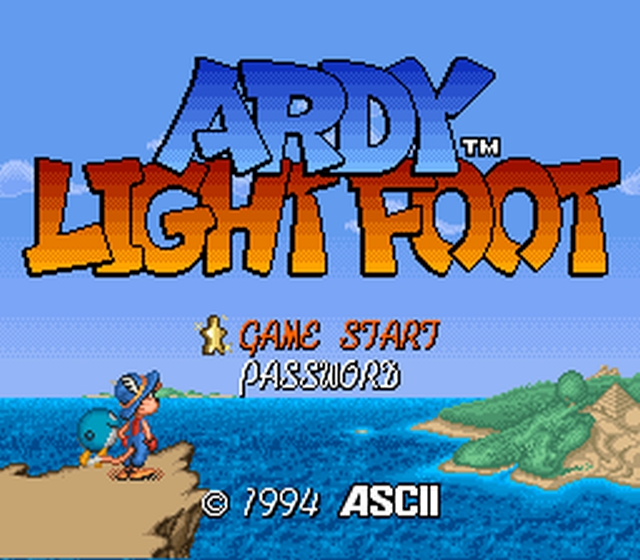
Among the first to make the somewhat misguided step toward cinematic game design were a handful of platformers found on expensive gaming computers such as the Amiga and Pansonic 3DO; the likes of Another World and Flashback were much more compelling than the dumpster of FMV games, despite the latter category taking a far more literal approach to retranslating cinematic properties. The superior hardware necessary to realize the visons of these "cinematic platformers" was a worthy artistic decision that unfortunately limited their audiences. Most platformers of the era were meager mascot ripoffs of Sonic and Mario, but Ardy Lightfoot is a game that, depending on how you look at it, is located somewhere in the middle.
Upon starting this Super Nintendo title, seeing the imfamous Titus logo associated with some of the worst games ever made -- Superman 64, Blues Brothers 64, Superman for Game Boy, et cetera -- gave me a restrained sense of skepticism as to what lay ahead. However, it turned out Ardy was developed by ASCII, not Titus, who instead published the game. It also turned out that this game wasn't too bad!
 Credit: ASCII/Titus Software
 Credit: ASCII/Titus Software
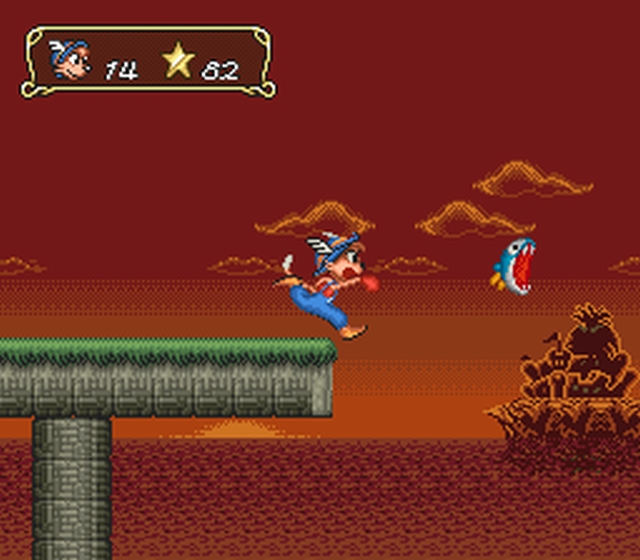
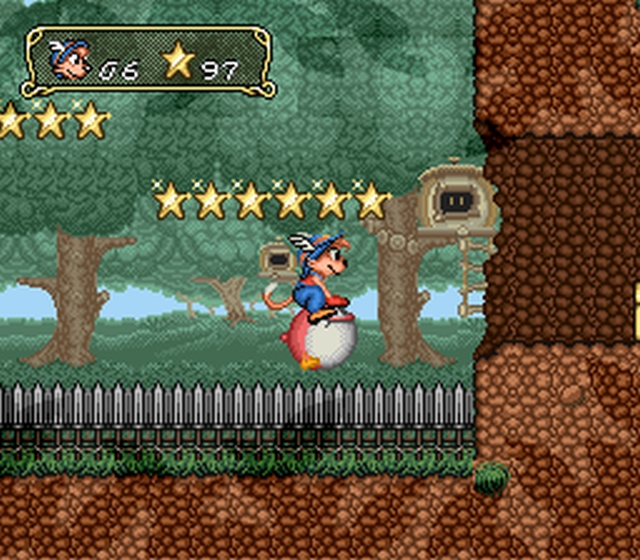
Concerning gameplay, Ardy is an inuitive, albeit dry, platformer. Aside from directional inputs, it uses only two buttons; one is a jump that can also be used to do a Tigger-esque high jump that damages enemies below (think of the Duck Tales cane), and the other is an attack that uses a strange Pokemon friend to chomp enemies. That spherical critter also acts as a shield of sorts, allowing Ardy to take a hit before going poof. It also can use situational power-ups to break certain walls and inflate into a better version of the P-Balloon from Super Mario World. Although Ardy's run cycle is slippery -- there's even a skidding sound effect to communicate it, which is the next best thing to not having the mechanic in the first place -- the controls are intuitive but will require some practise to overcome some challenges.
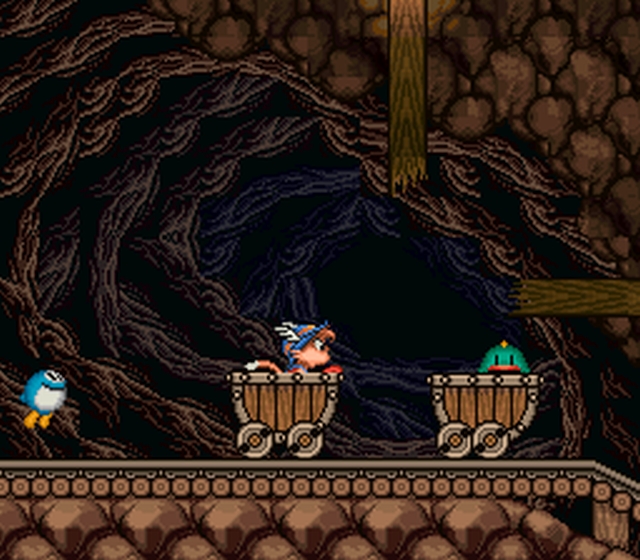
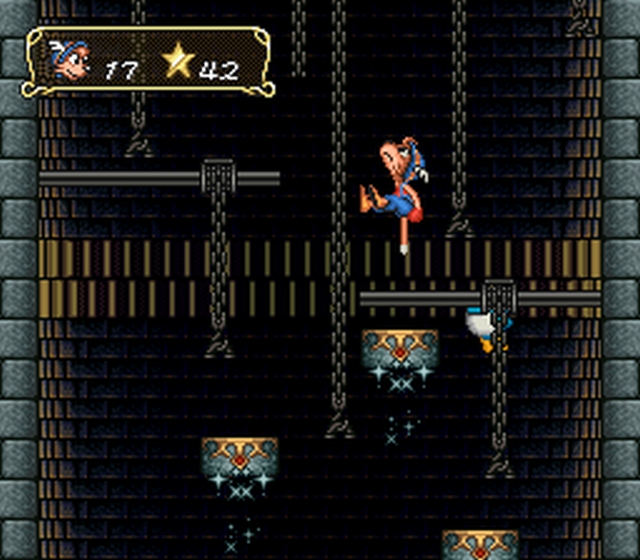
Levels themselves are usually dry but fine, containing checkpoints and secrets while keeping leaps of faith to a minimum. However, you'll need to have a pretty good hold over your small moveset, for the game likes to throw Donkey Kong Country-style jumps at the player from time to time in such setpieces as a mine cart ride and a hall with a mirror floor showing incoming projectiles. These sections are memorable yet devious and occasionally uncommunicative of threats, at times requiring memorization and almost exploitative manuevers to conquer. This could result in some quitting the game, but it would be unfortunate to miss what the game wishes to show.
Ardy Lightfoot can be categorized as another mascot platformer, but there's more going on here. The game's presentation is remeniscient of a silent film, with the only text being an expository intro and the rest of the cutscenes being silent. That's right, cutscenes; just little scenes of moving in-game assets showing what's going on between some levels. Pretty nifty for a platformer in 1994. Aesthetically, the setting hearkens to Buster Keaton-era Westerns but takes us to a variety of other neat locations. Our character for the journey is not an Aero the Acro-Bat or Awesome Possum desperately cashing in on Sonic's success, but rather a kangaroo-boy of his own. Ardy is cute as a button, has quite a few animations, and does nothing dumb or annoying, making him much more likeable than the likes of Bubsy. He and the setting are responsible for most of the game's charm.
 Credit: ASCII/Titus Software
 Credit: ASCII/Titus Software
Instead of just having a manual or intro set things up and then have the game take place with no narrative structure, events actually transpire here. However, it's just a cartoon plot; you have to get the Chaos Emeralds or something and beat the bad guy and save Ardy's, um, human lady friend? Well, now we know where Sonic '06 stole its award-winning screenplay from! Though it's nothing near as creepy here. In fact, it's not much at all; it's the kind of cast that sums up everything in their looks. The story of Ardy is more something I can certainly see captivating children of the '90s. Mario and Sonic got sent off on their quests and that was about it; here, the simple cutscenes convey a sense of scale and stakes to the journey. It's not Martin Scorsese-tier writing, but it was an attempt better than any mascot platformer prior, providing a story a kid can be a participant in instead of a spectator of.
Ardy Lightfoot is unremarkable by today's standards, but it had what it needed to make an impact on the little ones of yesteryear. Competant gameplay, a wonderfully atmospheric soundtrack, and a narrative of any quality to progress were fresh and innovative during the younger years of gaming and certainly more welcome than the constant forced spectation of today's more wretched triple-A games. It's no masterwork, but Ardy Lightfoot is still worth a few minutes from the retro platformer fan.