My opinion has always been that while JRPGs are full of delightful and comforting monotony, farming games are just plain monotonous. What happens when the two genres are combined, though? You get one heck of a JRPG.
Return to PopoloCrois: A Story of Seasons Fairytale, the latest entry in the PopoloCrois franchise, picks up where the last game left off: with Prince Pietro having just saved the kingdom. Now it's his birthday, and strange things are afoot once more in the land of PopoloCrois. Vegetation is dying, and reports of black beasts are coming in from the kingdom's citizens. After a series of unfortunate events, Pietro finds himself in the alternate world of Galariland. Now he must step up once more, to thwart the darkness that threatens both this strange new world and the home he left in the other dimension.
 Credit: Marvelous Interactive/XSEED Games
In case the above summary didn't make it obvious, the latest PopoloCrois features a pretty standard JRPG story. It benefits from an excellent localization by XSEED, along with a cast of charming characters, but those who are looking for anything new won't find it here. The game even commits the cardinal sin of having a villain spout that tired old line: “We’re not so different, you and I.”
Structurally, PopoloCrois is similarly standard. Pietro must travel to the four corners of Galariland, purifying each area in the process. Only then will the path to the antagonist open. It can get a little boring, but the amusing antics of the cast go a long way to help alleviate the mundane. After all, it’s not every day that a JRPG hero gets to travel with a pumpkin-headed amnesiac.
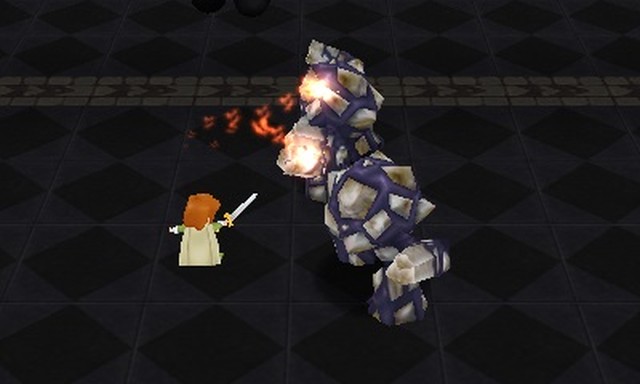
Even if PopoloCrois were entirely dull in every other aspect, its battle system is anything but. Battles are turn-based, with a system similar to the one employed in Falcom’s Trails in the Sky. The available grid indicates how far characters can move and how far their actions reach, rather than turning the game into an SRPG. An added wrinkle is that fields often feature obstacles that characters must traverse, which forces the player to think before committing to a move.
 Credit: Marvelous Interactive/XSEED Games
So, what makes Return to PopoloCrois: A Story of Seasons Fairytale anything more than one more charming and well-made but otherwise standard JRPG? The subtitle holds the answer.
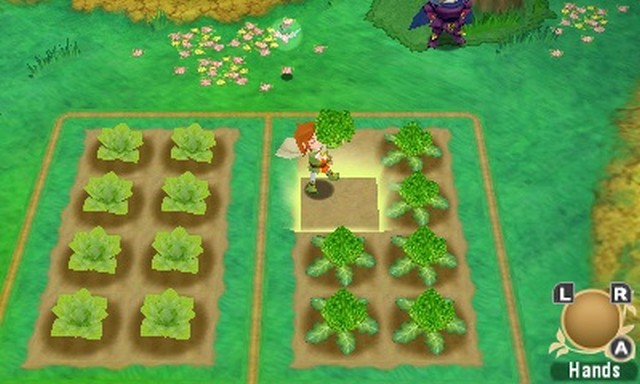
For those unaware, Story of Seasons is the new name for the Harvest Moon franchise in the west. The decay of vegetation is one of the side effects of the darkness now spreading through Galariland and PopoloCrois, which means Pietro and his friends must purify the land if they have any chance of reviving the great fairy. In any other JRPG, a job well done would prompt a brief message of congratulations and the party would move to the next location. Here, members can stick around and farm the land they revitalized, then reap the bounty that results.
As I mentioned above, the appeal of farming games has tended to go over my head in the past. In the case of Return to PopoloCrois, the simulation elements finally clicked, thanks to their integration into the main adventure. Item synthesis is a hallmark of any good JRPG, after all, and farming augments the process because players can grow, mine, catch and even milk the ingredients needed to make more powerful items. Players can progress through the game without ever touching a hoe, but the satisfaction that comes from growing the ingredients needed to make more powerful equipment is exhilarating.
 Credit: Marvelous Interactive/XSEED Games
Players won't have to wait long to witness the fruit of their labor, either. Just stay at an inn for a few nights and the plants will be ready to harvest. I do wish there were a more streamlined approach to tilling the land and planting seeds, since the classic system of working individual squares one at a time is a little grating. Still, I'm impressed by how well the core gameplay featured in Story of Seasons has been carried over here without compromise.
Return to PopoloCrois respects the player's time in other ways, as well. It features some quality of life improvements that should be standard in every JRPG. Not only are there three distinct difficulty levels to ensure that anybody can get through the game, but you can also modify the encounter rate. The game’s default is set to High, since the Japanese version of the game only had one encounter rate, but for the Western release adds Mid and Low options, as well. I played through on the former of those, and encountered random battles every 20 steps or so. On Low, battles occur only about every 50 steps. It would be nice if players could just turn off random battles altogether, like they could in Bravely Default, since some later dungeons get a little long. But the low encounter rate option works nearly as well. Besides that, the 20-hour playtime makes this the perfect bite-sized game for the discerning JRPG fan looking to scratch that itch without giving up 100 plus hours.
Return to PopoloCrois: A Story of Seasons Fairytale may be the latest game in a long-running franchise, but it welcomes newcomers to a charming standalone story, a fun cast, strategic battles and even a full-blown farming game that is built right into the experience. My history with farming games meant I approached with some skepticism, but I’m a believer now. I still may not rush out to pick up a standalone farming game, but I'd love to see developers make more JRPGs like this one...